
Assume You're Wrong, Try To Be Less Wrong
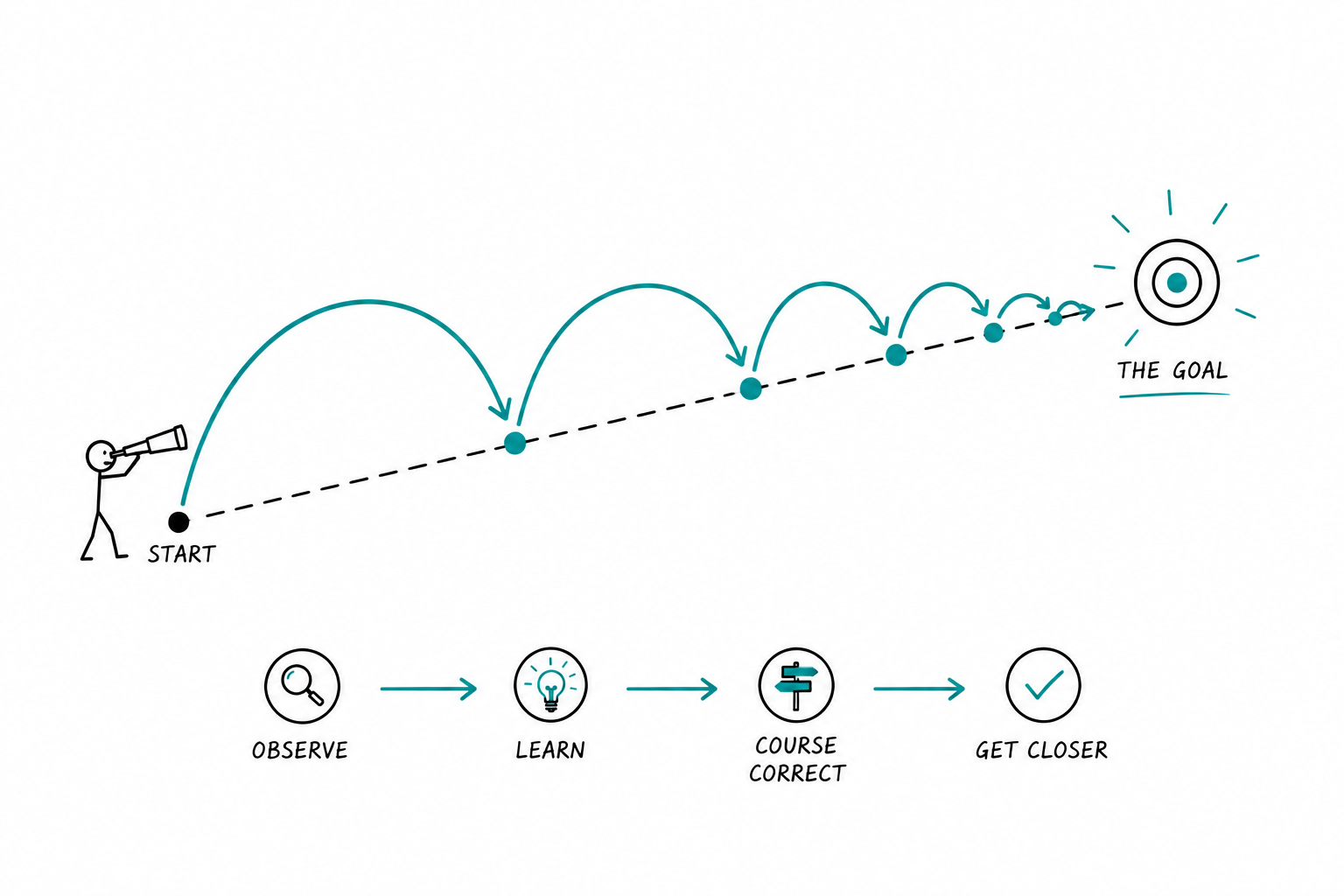
The Elon Framework: How ForceEquals Operationalizes "Assume You're Wrong, Try to Be Less Wrong"
Elon Musk describes a framework for thinking that most companies intellectually agree with but operationally ignore.
It's elegant and brutal: assume you're wrong, try to be less wrong.
Not assume you're right and defend it. Not build processes to prevent failure. Not lock things down and maintain the status quo.
Assume you're wrong. Figure out what you got wrong. Fix it. Do it again next week.
Most companies have this on a poster somewhere. No company actually operates this way.
ForceEquals is built specifically to make this operational.
The Framework Mapped to ForceEquals
Here's how the Elon framework works, and where ForceEquals enables each step:
Step 1: Embrace Uncertainty
The posture: you don't have all the answers. Your policies might be wrong. Your assumptions might not match reality. And that's okay.
ForceEquals enables this: It surfaces escalations and guardrail breaches in real time. Every agent trying to break a rule is a signal that something doesn't match your assumptions. ForceEquals makes these signals visible instead of buried. It forces the organization to acknowledge uncertainty instead of pretending the policy is always right.
Step 2: Ask Better Questions
When an escalation surfaces, don't ask "how do I prevent this?" Ask "why did this happen? What does this reveal?"
ForceEquals enables this: It routes escalations to the right humans with full context. Not only for approval. For investigation. It surfaces the pattern: why do procurement agents keep trying this vendor? Why do scheduling agents keep working around this constraint? It enables leaders to ask better questions instead of building more barriers.
Step 3: Test and Learn
Take the question and test it. If a procurement agent keeps buying from a vendor finance flagged as risky, investigate. Does that vendor actually perform better? Is the rule outdated? Is there a legitimate case for controlled risk?
ForceEquals enables this: It tracks every escalation, every decision, every outcome. It captures what changed and why. It makes the test visible. Did we relax the vendor rule? What happened? Did costs go down? Did quality improve? Did risk materialize? The outcome is data, not opinion.
Step 4: Gain a Better Understanding of the Truth
Based on the test, you now understand something about your business better than you did before. The policy was outdated. The vendor rule was too strict. The assumption about labor constraints was wrong.
ForceEquals enables this: It captures this learning and makes it operational. The escalation led to insight. The insight led to policy change. The policy change led to outcome. This becomes part of the organization's institutional knowledge. You're genuinely less wrong about how your business works.
Step 5: Loop Back and Ask Even Better Questions
Now you have better questions to ask. Not "should we have a vendor policy?" but "what's the right vendor policy given what we learned?" Not "should we automate scheduling?" but "what constraints are real and which did we imagine?"
ForceEquals enables this: Every week, new escalations emerge. Every escalation is the next test. Every outcome feeds the next question. The loop becomes continuous instead of annual. You're not waiting for next year's planning cycle to ask better questions. You're asking them weekly based on fresh data.
Why Most Companies Fail At This
Here's where most organizations get stuck: they intellectually understand the framework. The CEO says "assume you're wrong." The change management deck shows the framework. Everyone nods.
But then:
- An agent breaks a rule
- Someone locks it down instead of investigating
- The question never gets asked
- The learning never happens
- The loop breaks
Why? Because they don't have the infrastructure to make it operational.
Without ForceEquals:
- Escalations get lost in email
- Questions don't get asked because there's no visibility
- Tests don't get tracked because there's no system
- Outcomes don't feed the next cycle because they're not captured
- The loop is broken before it starts
How ForceEquals Closes the Gap
ForceEquals is the infrastructure that turns the Elon framework from poster material into operational reality.
It doesn't tell you to assume you're wrong. It surfaces the evidence that you are wrong (escalations, breaches, patterns).
It doesn't tell you to ask questions. It enables you to ask them by routing signals to the right humans with full context.
It doesn't tell you to test. It tracks every test automatically and captures outcomes.
It doesn't tell you to learn. It makes learning impossible to avoid because every escalation is tied to every outcome.
It doesn't tell you to loop back. It feeds every learning into the next cycle so you're asking better questions next week than you asked this week.
The Competitive Difference
The companies that win over the next five years won't be the ones that understand the Elon framework. They'll be the ones that operationalize it.
And they'll operationalize it through infrastructure like ForceEquals.
The company that builds this loop—assume you're wrong, ask better questions, test, learn, loop back—into their operations this month has a five-year head start over the company that's still talking about it in next year's planning cycle.
The gap isn't about understanding. It's about operationalization. About infrastructure. About making the framework automatic instead of aspirational.
Every week you're not running this loop, a competitor is running it and getting less wrong.
Getting Started
If you want to actually operationalize "assume you're wrong, try to be less wrong," here's what it looks like:
- Connect your agents to ForceEquals. You need one place for visibility and guardrail control—a single place for escalations, routing, and learning. Get visibility into what your agents are doing, where they're hitting guardrails, and what signals are emerging across your entire agent estate.
- Stop preventing them. Start investigating them. Route to the right humans so escalations reach the right expertise and the right authority to ask the right questions. Get them to the people who can investigate, understand context, and make strategic decisions—not just gatekeepers preventing action.
- Ask better questions. Why did this agent try this? What does it reveal? Leaders should lean in. This is where the CFO asks why procurement agents keep trying certain vendors. Where the COO investigates why scheduling agents work around labor constraints. Where the CIO looks at patterns across the entire agent estate. This isn't a compliance activity. It's a strategic one.
- Strategize, prioritize, plan, deploy. Using ForceEquals, AI accelerates the entire cycle: evaluate ideas against strategy, rank by impact, align stakeholders, and deploy in weeks instead of months. The goal: compress what used to take six months into 1-2 weeks, even for the largest organizations. PMOs shift from gatekeepers to strategic accelerators, helping move good ideas to impact faster.
- Track the outcome. ForceEquals captures it automatically. Did the change work? What did we learn? Every deployment is tracked, measured, and fed back into the system.
- Loop back. Use that learning to ask even better questions next week.
That's it. That's the Elon framework made operational.
Most companies will talk about it. Some companies will try it without the right infrastructure and give up when it gets messy. The companies that operationalize it—with ForceEquals enabling the loop—will own their markets.
The question isn't whether the framework works. The question is: are you going to operationalize it, or keep it as a poster?
This is the last post in the continuous transformation series. The framework is simple. The execution is everything.
Ready to operationalize "assume you're wrong"? Learn how ForceEquals makes the Elon framework automatic at forceequals.ai.
This is Part 5 of a 5 Part series. Links to all below.
Escalations Are Signals, Not Failures
How To Build A Continuous Transformation Loop
The Jevons Paradox Is Your Biggest Opportunity
Assume Your Wrong, Try To Be Less Wrong