
Escalations Are Signals, Not Failures
Escalations Are Signals, Not Failures: The Framework That Changes Everything
For decades, escalations were a problem to prevent.
Something broke. It escalated to IT. Someone fixed it. Escalations meant failure. You wanted fewer of them.
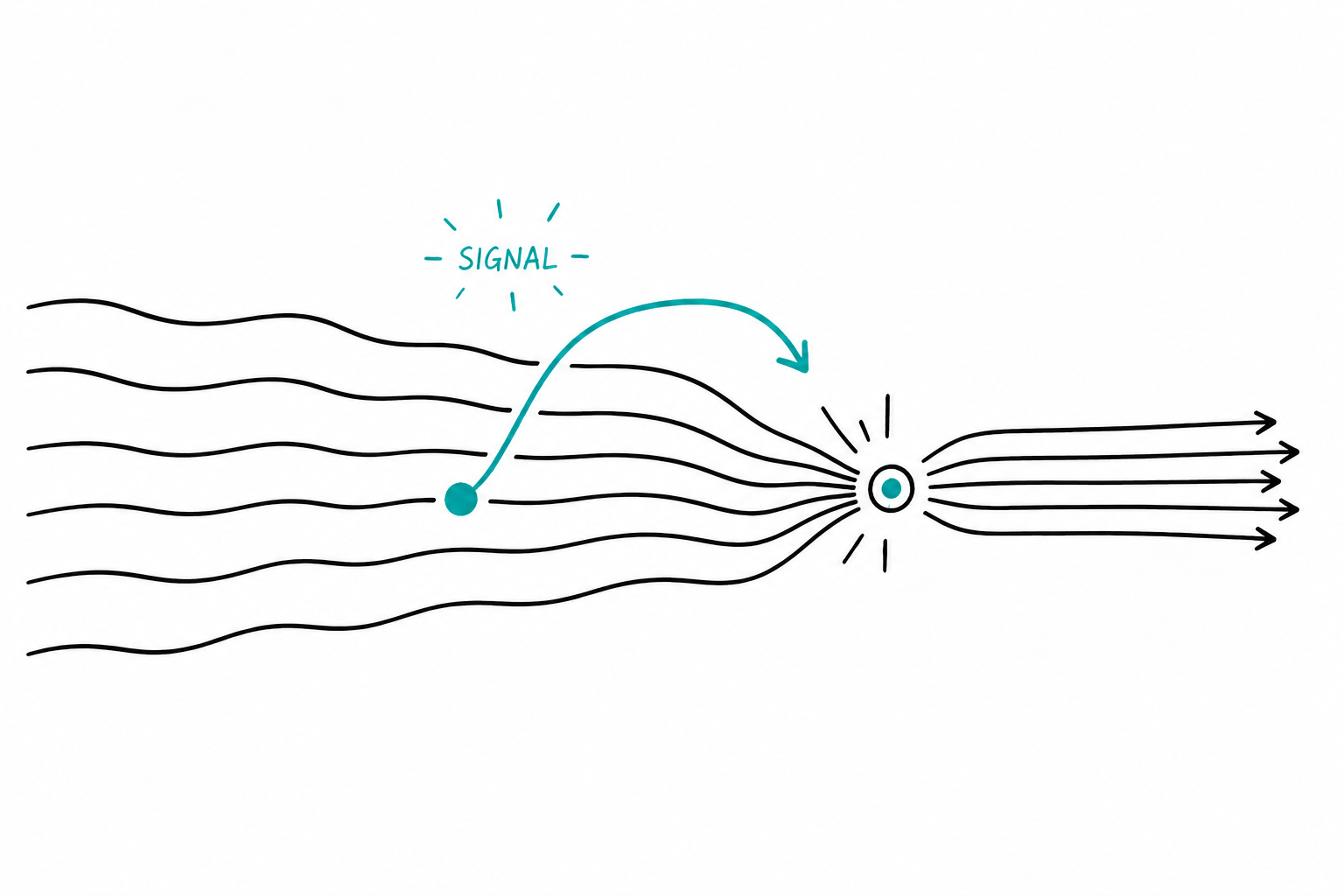
This thinking is destroying companies. Because in an AI-driven enterprise, escalations are the opposite of problems. They're the signal. They're where the questions live. They're the frontier of what the organization needs to learn.
Every leader should want to be closer to escalations, not further away.
The Old Model vs. The New
In the old model, escalations went to IT because they were technical problems. Your email system went down. Escalate to IT. Fix it. Move on.
In the new model, escalations go to business leaders because they're strategic questions. An agent tried to buy from a vendor that finance flagged as risky. That's not a technical failure. That's a question: why did the agent try? What does it see that we don't? Are our rules actually right, or are we preventing something valuable?
Here's the shift: escalations aren't something to minimize. They're something to obsess over. The CIO, the CFO, the COO—they should be studying escalation patterns daily. Why are these decisions always escalating? What is the system trying to tell us? What assumption are we wrong about?
This is the difference between companies that transform continuously and companies that get stuck.
The Questioning Framework
Elon Musk describes a framework that captures this perfectly:
Embrace uncertainty → New Questions → Test and Learn → Iterate Questions → Increase Consciousness → Better Questions → Loop Back
It's a cycle that prioritizes better questions over certainty. The posture: assume you're wrong, try to be less wrong.
Most companies operate from the opposite posture: assume you're right, try to prove it. They've codified their rules into systems. They've built their processes based on how things have always been done. They defend that status quo fiercely.
But when you deploy AI agents, those agents will expose the gaps in your assumptions. They'll try decisions that violate your "rules." Most companies respond by building more rules. Locking things down. Preventing the agent from doing anything unexpected.
The winning companies respond differently. They ask: why did the agent try that? What does it see? What does this reveal about how the business actually works versus how we thought it worked?
This isn't just philosophical. It's operational. It's the difference between companies that improve 1% per day and companies that plateau after their next project.
How Escalations Become Strategic
When a procurement agent consistently tries to buy from vendors that finance flagged as risky, most companies lock it down. Build more guardrails. Require more approvals.
The winning response: investigate. Maybe those vendors actually perform better. Maybe the finance rule is outdated. Maybe there's a legitimate case for controlled risk that nobody documented. Maybe our assumption was wrong.
If the assumption was wrong, you just discovered something valuable. You update the policy. You've leveled up. The company is less wrong about how to run itself.
If the assumption was right, but the rule was just poorly communicated, you capture that and make it operational. The agent learns. The guardrail becomes clearer.
If the vendor is actually risky, you've caught something before it became a problem. The escalation surfaced risk. The system worked.
In all three cases, the escalation made the organization smarter. It was a win. Not a failure.
Governance Enables This
Here's what most enterprises get wrong: they think governance slows you down. They think escalations are bureaucratic overhead.
This is backwards. Governance enables speed.
Real governance gives you visibility into what's happening. It routes decisions to the right humans intelligently. It captures what changed and why. It makes learning systematic instead of accidental.
An enterprise without governance is flying blind. Agents acting without visibility into what other agents are doing. Decisions that should be escalated getting lost in logs. Learning never captured. The same mistakes made twice.
An enterprise with governance can move fast with confidence. Every escalation reaches the right person. Every outcome is tracked. Every week, the organization learns something new.
What ForceEquals Does
ForceEquals is built on this insight: escalations are strategic signals, and they need to be central to how your business operates.
It gives you visibility into every escalation in real time. Not buried in logs. Not lost in email. Central.
It routes escalations to the right human with full context. Not approvals for everything. Just the decisions that matter. The ones that reveal something new. The ones that challenge your assumptions.
It captures outcomes from every escalation so you can learn from every one. Did that policy adjustment work? What did we learn? This becomes the next set of insights.
It makes the Elon loop operational: new questions emerge from escalations → you test → you gain a better understanding of the truth → better questions → loop back.
Without a system like ForceEquals, escalations stay scattered. You miss the patterns. You don't learn. You build more rules instead of asking better questions.
With ForceEquals, escalations become your operating system. They're how you stay competitive. They're how you transform continuously.
The Choice
This is the inflection point. There are two paths forward for enterprises with autonomous agents.
Path One: Prevent Escalations. Lock everything down. Build more rules. Require more approvals. The goal is control. This feels safe in the moment. But over time, it slowly degrades the business. You're preventing the organization from asking better questions. You're killing the signals. You're making it impossible to learn.
Path Two: Lean Into Escalations. Understand them. Ask why they're happening. Treat them as the smartest indicator of the next step. The goal is to learn faster than the market moves. This is uncomfortable. It means being wrong sometimes. But it's where competitive advantage lives.
The companies taking Path Two will transform faster and beat their competitors. The companies taking Path One will slowly degrade against competitors who actually ask questions.
The next part of this series shows how to actually build a continuous transformation loop. Spoiler: it requires three things, and most companies are missing one.
Ready to make escalations strategic? Learn how ForceEquals enables this at forceequals.ai.
This is Part 1 of a 5 Part series. Links to all below.
Escalations Are Signals, Not Failures
How To Build A Continuous Transformation Loop
The Jevons Paradox Is Your Biggest Opportunity
Assume Your Wrong, Try To Be Less Wrong